____________________
Did You Know . . .?
Benjamin Franklin wasn't trusted to write the Declaration of Independence because it was feared he would put a joke in it.
_____
HISTORICAL EVENT

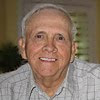
In June 1963 he was forced to end his literal blockade of the University of Alabama and allow the enrollment of African-American students. In 1968, he made another strong run for president as the candidate of the American Independent Party and managed to get on the ballot in all 50 states. On Election Day, he drew 10 million votes from across the country.
In 1972, Governor Wallace returned to the Democratic Party for his third presidential campaign and was showing promising returns when Arthur Bremer shot him on May 15. Wallace was permanently paralyzed from the waist down. In time, he gained the political support of Alabama's growing African-American electorate and in 1983 was elected Alabama governor for the last time. During the next four years, the man who had promised segregation forever made more African-American political appointments than any other figure in Alabama history.
He announced his retirement in 1986 and died in 1998.
_____
WORD FOR TODAY
comprise
verb
1. To consist of; be composed of.
2. To include; contain.
Usage Note: The traditional rule states that the whole comprises the parts and the parts compose the whole. In strict usage: The Union comprises 50 states. Fifty states compose (or constitute or make up) the Union. Even though careful writers often maintain this distinction, comprise is increasingly used in place of compose, especially in the passive: "The Union is comprised of 50 states." Surveys show that opposition to this usage is abating. In the 1960s, 53 percent of the Usage Panel found this usage unacceptable; in 1996, only 35 percent objected.
_____
CELEBRITY BIRTHDAYS
(born January 14, 1964)

Shepard Smith is an American television news anchor. He is the former host of Fox Report with Shepard Smith and Studio B weekdays on Fox News Channel. As of October 2013, he is now anchor of "Shepard Smith Reporting" as well as the managing editor of the Breaking News Division.
(born January 14, 1941)

Faye Dunaway is an American actress. She won an Academy Award for Best Actress for her performance in the 1976 film Network. Dunaway was previously nominated for Bonnie and Clyde (1967) and Chinatown (1974). She has starred in a variety of other successful films, including The Thomas Crown Affair (1968), Little Big Man (1970), The Towering Inferno (1974), Three Days of the Condor (1975), and Mommie Dearest (1981).
(born January 14, 1948)

Carl Weathers is an American actor and former professional football player. He is best known for portraying Apollo Creed in the Rocky series of films, Dillon in Predator, Chubbs Peterson in Happy Gilmore and Little Nicky, and an exaggeratedly frugal fictionalized version of himself in the television series Arrested Development.
(born January 14, 1943[

Holland Taylor is an American actress of film, stage, and television, and playwright. Her notable television roles include Ruth Dunbar in Bosom Buddies, senator's wife Margaret Powers on Norman Lear's The Powers That Be, Judge Roberta Kittleson on The Practice and Evelyn Harper in Two and a Half Men. She is also the author of the solo play Ann, based on the life and work of Ann Richards.
__________
The lamentably common use of comprise as a synonym of compose or constitute is a wanton and indefensible weakening of our vocabulary.
--Ernest Gowers
NASA TV